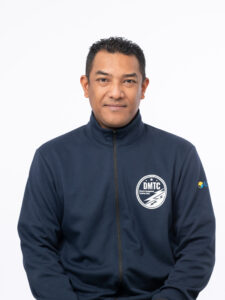
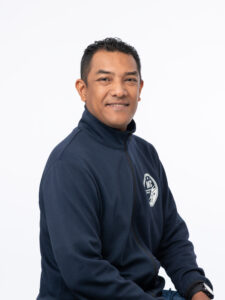
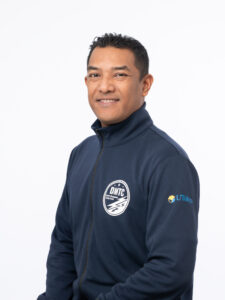
My name is Lieutenant Commander Maritime Hizam bin Zulkifli, and I serve with the Malaysia Coast Guard under the Ministry of Home Affairs. I have been in service for 15 years, currently holding the position of Senior Assistant Director and Head of the Maritime Rescue Sub-Centre (MRSC) in Kota Kinabalu. In my role, I am responsible for coordinating search and rescue operations in a region characterized by critical offshore infrastructure and heavy passenger vessel traffic.
My Journey in Japan
Over the past five months, I have had the privilege of immersing myself in Japan’s world-class disaster management ecosystem through the PRESTIJ program together with Disaster Management Training Center (DMTC), University of Tokyo.
This journey has taken me from the operational centers of Tokyo to the historic sites of Kobe and Fukushima. I have engaged in hands-on learning ranging from the NTT East Operation Centre and JAXA Space Centre to observing community-level drills at Maiko High School and the tsunami simulation in Shirahama. These visits were not just observations; they were a deep dive into how a nation builds resilience through infrastructure, technology, and—most importantly—culture.
Key Learnings
The most profound lesson I have learned here is the Japanese philosophy of disaster risk reduction, specifically the concepts of ‘Self-Help’ and ‘Mutual-Help’. I witnessed how Japan integrates local communities into the disaster response framework, ensuring that when formal agencies are stretched, the community is empowered to act. I also studied the implementation of the Sendai Framework, particularly Priority 4, which emphasizes enhancing preparedness for effective response.
Capstone Project: Enhancing Offshore MRO Response
These insights directly inspired my capstone project: Enhancing Offshore Maritime MRO Response: A Policy & Governance Framework.
Malaysia faces a critical challenge: our response times for large-scale offshore disasters often exceed the ‘Golden Hour’ due to fragmented coordination and legislative gaps in NADMA Directive No. 1.
My project proposes a solution based on three pillars, heavily influenced by my time in Japan:
- Policy Reform to reclassify maritime disasters.
- Unified Command through a dedicated Maritime Disaster Command Centre (MDCC).
- Community Integration, adapting Japan’s ‘Self-Help’ model to train local maritime communities as Auxiliary First Responders.
My goal is to reduce our offshore response time to under 60 minutes, ensuring we can effectively ‘Guard, Protect, and Save’ lives in Malaysian waters.