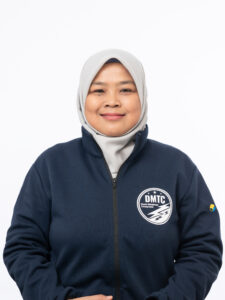
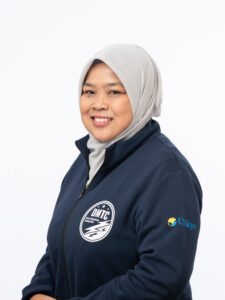


First and foremost, in the name of Allah, the Most Gracious and the Most Merciful. All praise is due to Him for the strength and perseverance granted to me to complete this academic endeavor.
This work is the culmination of my journey as a student at the Disaster Management Training Centre (DMTC), an experience that has profoundly reshaped my understanding of resilience and crisis response. As a Social Welfare Officer within the Malaysian government, my daily mission is centered on the protection and well-being of the vulnerable. This study was born out of a necessity to bridge the gap between high-level disaster logistics and the ground-level humanitarian needs of our communities during times of calamity.
The challenges of the past few years have shown that disaster management is not merely a technical exercise, but a deeply human one. Through the curriculum at DMTC, I have been equipped with strategic frameworks that I have sought to integrate with the empathetic, person-centered approach of the Department of Social Welfare (JKM). This paper reflects my commitment to ensuring that Malaysia’s disaster response mechanisms are not only efficient but also inclusive and compassionate.
I wish to extend my profound gratitude to the instructors at DMTC for their expert guidance and to my superiors from Malaysia for providing me the opportunity to pursue this specialization. To my colleagues who stand on the front lines of social service, thank you for your constant inspiration.
May this work serve as a humble contribution toward a more prepared and resilient Malaysia, ensuring that in the face of any disaster, no citizen is left behind.